
What Should Buyers Consider When Choosing Between City and Rural Living Near Hudson?
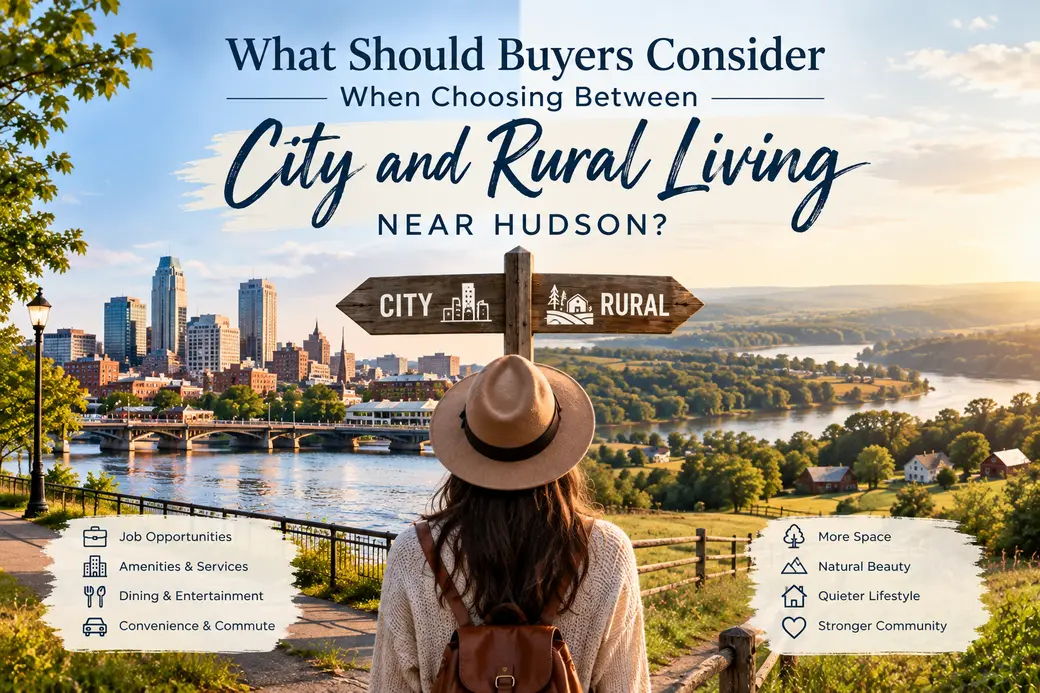
Buyers choosing between city and rural living near Hudson, WI should look beyond the house itself and consider how the property fits their everyday lifestyle.
Do you want sidewalks, nearby restaurants, and easier access to city services?
Or would you rather have more land, greater privacy, and the feeling of being surrounded by open space?
For buyers searching around Hudson and the Twin Cities, the decision is not simply about choosing between a neighborhood and an acreage property. It can affect your commute, maintenance responsibilities, utilities, privacy, outdoor space, future plans, and even how you spend an ordinary Tuesday evening.
Hudson itself offers a range of residential settings, while surrounding communities and rural areas in St. Croix County can provide larger lots, agricultural surroundings, woodlands, and more open space. St. Croix County's comprehensive plan specifically identifies both residential and mixed rural residential areas, with local zoning determining what development is permitted in each location.
So, which setting makes more sense for you?
At Johnson Home Group, we encourage buyers to start with lifestyle rather than simply comparing homes by bedrooms, bathrooms, or square footage.
The right question is not, "Which type of property is better?" It is, "Which type of property better fits the way I want to live?"
What Is the Biggest Difference Between City and Rural Living Near Hudson?
The biggest difference is how much convenience, space, privacy, and property responsibility you want in your everyday life.
City living near Hudson generally means living within an established community with neighborhoods, municipal infrastructure, and closer access to many everyday services.
Rural living can provide larger lots, more separation from neighbors, agricultural or natural surroundings, and greater privacy.
But those benefits can come with additional responsibilities.
A larger property may mean more lawn maintenance, longer driveways, more snow removal, private utilities, or additional considerations related to land use and zoning.
Before comparing individual houses, think about what you want your typical day to look like.
Ask yourself:
- How much land do I actually want to maintain?
- How important is privacy?
- Do I want to be close to restaurants and shopping?
- How much driving am I comfortable doing?
- Do I want space for hobbies, animals, gardens, or recreational equipment?
- How much property maintenance am I willing to take on?
Those questions can quickly narrow your search.
How Important Is Location and Convenience to Your Lifestyle?
Buyers should consider how frequently they want to access schools, shopping, restaurants, parks, healthcare, entertainment, and other everyday services.
One of the biggest advantages of living in or near an established community is convenience.
You may be closer to the places you visit regularly, which can make errands and spontaneous outings easier.
Hudson's long-range planning documents emphasize continued investment in community assets including schools, parks, services, and infrastructure.
Rural properties can offer a very different experience.
You may have more distance between your home and the nearest grocery store, restaurant, or service provider.
That does not necessarily make rural living inconvenient. For some buyers, the extra drive is a small price to pay for land and privacy.
The key is to consider your actual routine, not an imagined version of it.
If you regularly grab dinner after work, commute to the Twin Cities, take children to activities, or visit family, map out those trips before deciding how much distance you want between home and daily destinations.
How Much Land Do You Really Need Near Hudson?
Buyers should choose the amount of land based on how they plan to use it, not simply because a larger lot sounds appealing.
Acreage can be wonderful.
You might want room for a garden, workshop, fire pit, recreational equipment, pets, or simply more breathing room between you and your neighbors.
But every additional acre can also bring more maintenance.
Ask yourself what you will actually do with the property.
If you want two acres because you love the idea of privacy, that is one consideration.
If you want ten acres because you have a specific plan for the land, that is another.
St. Croix County's comprehensive plan identifies rural residential areas that can include farmland, woodlots, open land, agricultural-related uses, and single-family homes.
That means rural living is not necessarily just "a bigger backyard."
The surrounding land uses can be an important part of the experience.
Before buying acreage, ask:
- How will I maintain the land?
- Is the property wooded, open, agricultural, or a combination?
- Are there wetlands, slopes, or other features that affect how I can use it?
- What structures can I add?
- What activities are allowed?
- Could neighboring land be developed or used differently in the future?
What Should Buyers Know About Utilities in Rural Areas?
Rural buyers should understand exactly how the property receives water, handles wastewater, and receives other essential services before making an offer.
This is one of the most important differences between many city and rural properties.
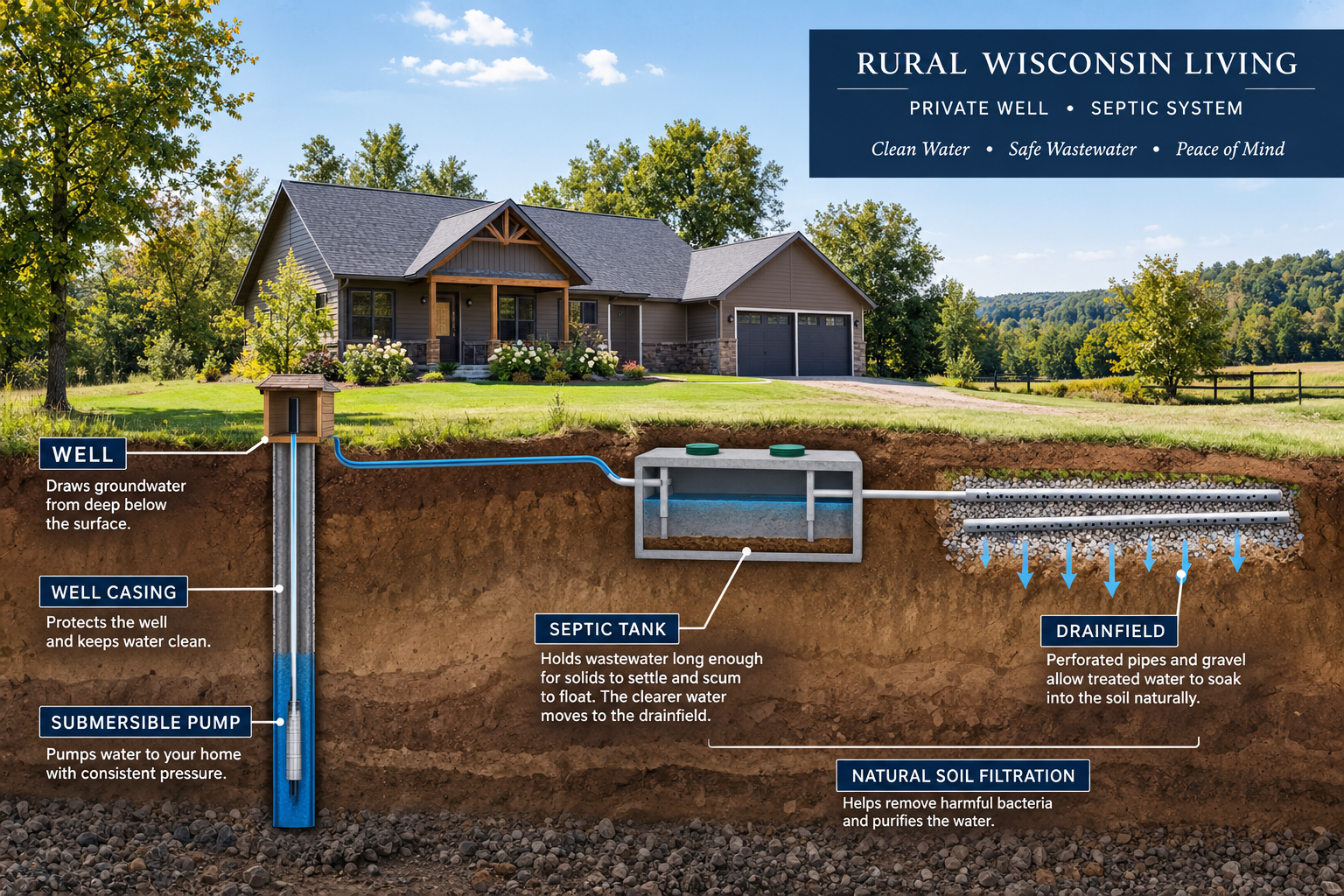
A rural home may use a private well and private onsite wastewater treatment system rather than municipal water and sewer.
St. Croix County's Rural Living Guide explains that rural homes commonly use private wells and private onsite wastewater treatment systems, commonly called septic systems. It also outlines homeowner responsibilities for well testing and septic maintenance.
That means buyers should not assume that every property operates like a typical city home.
Ask about:
- Private well
- Septic system
- Well records and water testing
- Septic maintenance
- Heating fuel
- Propane tanks
- Internet availability
- Electrical service
- Backup power options
This is an area where due diligence matters.
A rural property can be an excellent fit, but buyers should understand the systems they are purchasing along with the house.
How Does the Commute Compare Between City and Rural Living Near Hudson?
Your commute can feel very different depending on how far your home is from Hudson, major highways, and the Twin Cities.
For many Hudson-area buyers, location involves more than getting to downtown Hudson.
It may also involve commuting into Minnesota.
A rural property that looks only a few miles farther away on a map can feel very different when you make the drive every weekday.
Before deciding, test the commute at the times you would actually travel.
Try it during morning traffic.
Try it during the afternoon.
And if possible, visit the property during different seasons.
The question is not simply, "How far is it?"
The better question is:
"Am I comfortable making this drive several times a week for the next several years?"
That answer may change which properties make sense for you.

What Should Buyers Know About Zoning and Future Land Use?
Buyers should investigate zoning and future land-use plans before purchasing a property, especially when considering rural acreage.
A property may look perfect today, but its zoning determines what uses are permitted and what restrictions may apply.
Hudson maintains official zoning and future land-use maps, and the city notes that an address labeled "Hudson" does not necessarily mean the property is within the City's municipal limits.
That distinction matters.
A property with a Hudson mailing address could fall under a different jurisdiction and therefore different zoning, permitting, road, utility, or development rules.
St. Croix County also has its own comprehensive planning and land-use framework, while individual municipalities may have additional plans and regulations.
Before buying rural property, ask:
- What municipality is the property actually located in?
- What is the zoning classification?
- What uses are permitted?
- Are there minimum lot-size requirements?
- Can additional structures be built?
- Are there restrictions on animals?
- What are the future land-use plans nearby?
This is particularly important if you are buying land because of a specific future plan.
Is Rural Living Really More Private?
Rural properties often provide more physical separation, but buyers should evaluate the actual surroundings rather than assuming acreage guarantees complete privacy.
A home on several acres may feel significantly more private than a traditional neighborhood.
But look beyond the property lines.
What is next door?
What is across the road?
Is there farmland nearby?
Are there active agricultural operations?
Are there businesses, gravel roads, utility corridors, or other uses that affect the property's surroundings?
St. Croix County's rural planning documents recognize agricultural uses, woodlots, open lands, and other rural activities as part of the landscape in mixed rural residential areas.
For some buyers, that rural activity is part of the appeal.
For others, it may be something they did not anticipate.
The best rural property evaluation includes looking beyond the lot itself.
What Maintenance Should Buyers Expect With Rural Living?
Rural homeowners may have more land and infrastructure to maintain, so buyers should understand the full maintenance commitment before purchasing.
Think beyond mowing the lawn.
A rural property could involve:
- Longer driveways
- More snow removal
- Private wells
- Septic systems
- Larger lawns
- Trees and wooded areas
- Outbuildings
- Fences
- Gravel roads or driveways
- Private drainage systems
- Larger roofs and exterior surfaces
That does not mean rural living is necessarily more difficult.
It simply means the maintenance profile can be different.
St. Croix County's Rural Living Guide specifically notes that private septic systems require ongoing maintenance and that property owners are responsible for their care.
Before buying, create an honest estimate of the time and money you are willing to spend maintaining the property.
More land is valuable only if you enjoy having it.
How Should Buyers Think About Schools and Family Needs?
Families should compare the actual school district, transportation, activities, and daily logistics associated with each property rather than assuming nearby homes have the same school options.
If schools are an important factor, verify the specific school assignments for each property.
Do not rely only on a listing description or a general impression of the neighborhood.
The same broad Hudson-area search can include properties under different jurisdictions and community settings.
Think about more than the school building itself.
Consider:
- School transportation
- Commute time
- Sports and activities
- Childcare
- Friends and social connections
- After-school logistics
- Future school transitions
A property can be beautiful and still create a daily routine that does not work well for your household.
Which Setting Offers the Outdoor Lifestyle You Want?
City and rural properties can both support outdoor living, but they offer different kinds of access and space.
If you love walking to parks, biking, grabbing coffee, or being close to community events, an established neighborhood may fit your lifestyle.
If your ideal Saturday involves gardening, hiking on your own land, working in a shop, or enjoying a larger private yard, rural living may offer something different.
Hudson's comprehensive planning documents emphasize parks, trails, schools, and community amenities as important parts of the city's future.
Meanwhile, rural areas can offer larger private spaces and access to open land, woodlots, and agricultural landscapes.
The important question is not which lifestyle sounds better on paper.
Which one sounds like your actual weekends?
Imagine a normal Saturday morning.
Where do you want to be?
That answer can be surprisingly revealing.
What Should Buyers Consider About Future Resale and Flexibility?
Buyers should think about how well the property will fit not only their current lifestyle, but also potential future needs.
You may love the idea of five acres today.
But will you still want to maintain five acres ten years from now?
Maybe you will.
Or perhaps your priorities will eventually shift toward a smaller home, easier maintenance, or closer access to services.
The same applies to city living.
A neighborhood home may work beautifully while children are young, but you may later want more privacy, a workshop, or additional land.
There is no way to know exactly what your future will look like.
But you can ask whether the property gives you reasonable flexibility.
Consider:
- Aging in place
- Future maintenance needs
- Work-from-home space
- Additional structures
- Family changes
- Hobbies
- Accessibility
- Potential future buyers
Buy the lifestyle you want, but keep your future self in the conversation.
What Questions Should You Ask Before Choosing City or Rural Living Near Hudson?
The best way to compare properties is to create a lifestyle checklist before you fall in love with a specific house.
Try ranking the following from most important to least important:
- Privacy
- Acreage
- Commute
- Schools
- Walkability
- Restaurants and shopping
- Outdoor recreation
- Maintenance
- Utilities
- Property taxes
- Neighborhood feel
- Future development
- Home office space
- Outbuildings
- Animals or hobby farming
Then compare actual properties against that list.
This can help prevent a common buyer mistake: choosing the house first and trying to make the lifestyle fit afterward.
The property should support the way you want to live, not force you to completely reorganize your life around it.

How Can Johnson Home Group Help You Compare Hudson-Area Properties?
Johnson Home Group can help you evaluate properties based on both the home and the lifestyle that comes with it.
When you are comparing a neighborhood home with an acreage property, the details outside the house can be just as important as the kitchen, bedrooms, or finished basement.
We can help you identify questions to ask about the property, location, surrounding area, and the factors that may affect your everyday experience.
Whether you are looking for a home in Hudson, a quieter property outside the city, or a location that balances rural space with Twin Cities access, the goal is to help you make an informed decision based on what matters most to you.
How Does an AI-Certified Agent Add Value for Hudson-Area Buyers?
An AI-Certified Agent can use technology to organize property information, streamline research, and help buyers compare options more efficiently.
At Johnson Home Group, AI-supported tools can help organize property details, research locations, streamline communication, and save clients time during the home search.
That can be especially helpful when comparing properties that differ significantly in location, lot size, utilities, zoning, and lifestyle.
But technology does not replace local expertise.
The real value comes from combining efficient tools with knowledge of Hudson, surrounding communities, and the questions buyers should ask before making a decision.
Final Thoughts: Should You Choose City or Rural Living Near Hudson?
Choosing between city and rural living near Hudson is ultimately a lifestyle decision.
Start with how you want your everyday life to feel, then find the property that supports it.
If you value convenience, established neighborhoods, nearby amenities, and less land to maintain, a city or suburban setting may align with your priorities.
If privacy, acreage, open space, and a quieter environment are more important, a rural property may offer the lifestyle you are looking for.
And there are plenty of options between those two extremes.
Before you decide, think about your commute, utilities, maintenance responsibilities, zoning, future plans, outdoor space, and the amount of privacy you actually want.
The right property is not simply the one with the most bedrooms or the biggest lot.
It is the one that fits the way you want to live.
Thinking about buying in Hudson, WI or the surrounding St. Croix County area?
Schedule a consultation with Johnson Home Group. We can help you compare locations, evaluate your options, and find a home that fits both your lifestyle and your long-term goals.
Frequently Asked Questions
Is it better to live in Hudson or in a rural area outside Hudson?
It depends on the lifestyle you want. Hudson can offer established neighborhoods, community amenities, parks, services, and convenient access to the Twin Cities, while rural properties can offer more land, privacy, and open space. The best choice depends on your priorities, commute, maintenance preferences, and plans for the property.
Are rural homes near Hudson usually on well and septic?
Many rural properties use private wells and private onsite wastewater treatment systems, but buyers should verify the specific property. St. Croix County's Rural Living Guide explains that private wells and septic systems are common for rural homes. Buyers should review available records and understand the maintenance responsibilities associated with these systems.
How much land do I need for rural living near Hudson?
There is no single acreage requirement that works for every buyer. The right amount depends on how you intend to use the property, how much maintenance you want, and what local zoning permits. St. Croix County's comprehensive plan identifies rural residential areas with different land-use patterns, so buyers should evaluate the specific property's zoning and jurisdiction.
What should I check before buying rural property in St. Croix County?
Buyers should investigate zoning, utilities, well and septic systems, road access, drainage, surrounding land uses, and future development plans. Local zoning and land-use rules can vary depending on whether a property is within the City of Hudson, Town of Hudson, or another jurisdiction.
Is rural living near Hudson good for people who commute to the Twin Cities?
It can work well for buyers who are comfortable with the additional driving required by their specific location and schedule. Before purchasing, test the commute during your normal travel times and consider winter driving conditions. The best property is one where the commute fits realistically into your everyday life.
Recent Posts


"Thanks for reaching out to The Johnson Group! We're here to guide you and provide all the real estate info you need along the way. Your dream home might be just a click away, and we're delighted to be a part of your real estate adventure!"