
Is It Cheaper to Live in Wisconsin or Minnesota? A Hudson WI & Twin Cities Comparison
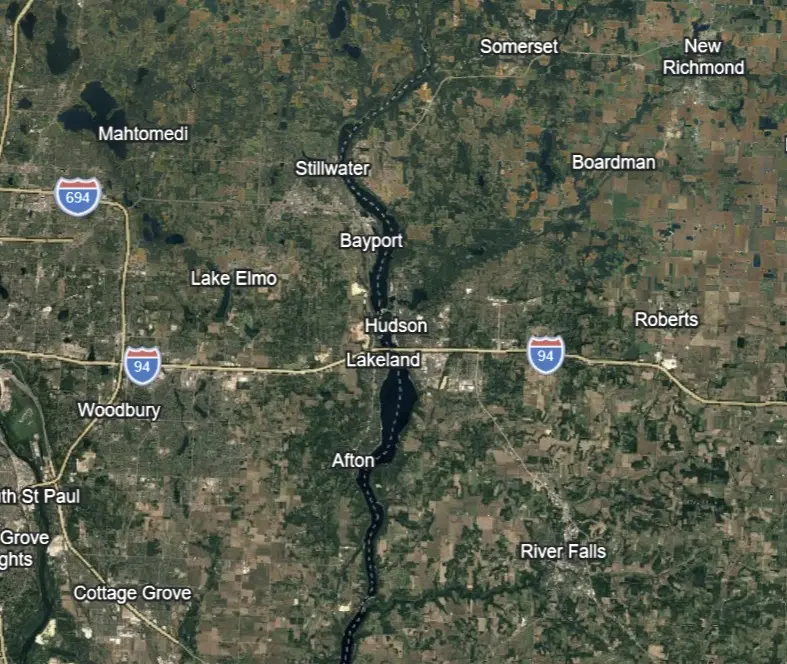
If you're deciding between living in Minnesota or Western Wisconsin — especially communities like Hudson WI — the overall cost difference depends on income level, home price, property taxes, and lifestyle priorities. In many cases, buyers relocating from the Twin Cities to Western Wisconsin see lower home prices and slightly different tax structures, but the savings vary by household.
Here’s how the numbers typically break down when comparing Minnesota to Western Wisconsin communities like Hudson.
Income Taxes: Wisconsin vs Minnesota
One of the biggest differences is state income tax.
Minnesota has a progressive income tax system with higher top brackets than Wisconsin. For higher-income households, Minnesota’s rates can result in noticeably larger annual tax bills.
Wisconsin also has a progressive structure, but the top rates are generally lower than Minnesota’s.
Important: If you live in Wisconsin and work in Minnesota, you typically pay income tax to the state where you earn the income — though credits often prevent double taxation. A tax professional can clarify specific scenarios.
Who benefits most?
Higher-income earners often see more income tax savings by living in Wisconsin.
Property Taxes Comparison
Property taxes can surprise people.
Wisconsin property tax rates are often slightly higher on paper than Minnesota’s. However, the actual bill depends on:
-
Home value
-
School district
-
Municipality
-
Local levies
In many cases, a lower purchase price in Western Wisconsin offsets similar or slightly higher property tax rates.
The key is comparing total monthly cost, not just tax percentage.
Home Prices in Hudson WI vs East Metro Suburbs
This is where many buyers notice a difference.
Median home prices in Hudson and nearby Western Wisconsin communities often trend lower than comparable suburbs in the East Metro area of St. Paul and Minneapolis.
Buyers frequently find:
-
Newer construction at lower price points
-
Larger lot sizes
-
Lower price per square foot
That said, competitive markets can narrow the gap, especially in high-demand neighborhoods.
Sales Tax Differences
Sales tax is another factor.
Minnesota’s statewide base sales tax rate is slightly higher than Wisconsin’s. However, local option taxes can apply in both states, depending on the city or county.
For most households, sales tax differences are modest compared to income and housing costs.
Commute & Lifestyle Tradeoffs
Cost isn’t everything.
Living in Western Wisconsin may mean:
-
Longer commute times into the Twin Cities
-
Different school districts
-
More suburban or semi-rural settings
Many buyers choose Hudson for a balance of small-town feel with metro access via I-94.
Lifestyle preferences often matter as much as financial differences.
Who Benefits Most from Moving to Wisconsin?
Relocating from Minnesota to Western Wisconsin can be advantageous for:
-
Higher-income earners
-
Buyers seeking newer homes at lower price points
-
Households wanting more land
-
Remote or hybrid workers
For some families, the move results in meaningful monthly savings. For others, the financial difference is minimal but the lifestyle fit is better.
Based in Hudson, WI, The Johnson Home Group regularly helps buyers compare real financial impacts when relocating from the Twin Cities to Western Wisconsin communities like Hudson, River Falls, and New Richmond.
Frequently Asked Questions
Is Wisconsin property tax higher than Minnesota?
It can be, depending on the municipality. Wisconsin’s effective property tax rates are often slightly higher, but because home prices in Western Wisconsin are sometimes lower, the total annual property tax bill may be comparable — or even lower — than in parts of Minnesota.
Do I still pay Minnesota income tax if I live in Wisconsin?
If you work in Minnesota but live in Wisconsin, you generally pay Minnesota income tax on income earned there. However, tax credits usually prevent double taxation. Your specific situation depends on residency status and where income is sourced.
Is Hudson WI considered part of the Twin Cities metro?
Hudson is not in Minnesota, but it is commonly considered part of the greater Twin Cities metro area due to its proximity to St. Paul and Minneapolis and its strong commuter connection via I-94.
Recent Posts











"Thanks for reaching out to The Johnson Group! We're here to guide you and provide all the real estate info you need along the way. Your dream home might be just a click away, and we're delighted to be a part of your real estate adventure!"